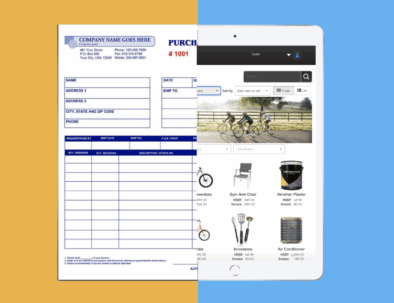
B2B ordering has traditionally been messy: long email threads, manual order entry, inconsistent product codes, and frequent mistakes that only show up after fulfillment starts. CSV or XLSX order uploads solve a large part of that problem by turning ordering into a structured, repeatable, and system-validated process.
Instead of relying on manual entry, buyers or sales reps can build complete orders in a spreadsheet and upload them directly into a commerce system. The result is faster ordering, fewer errors, and better alignment between sales, inventory, and fulfillment systems.
How CSV/XLSX Order Uploads Work
At a high level, the process is simple:
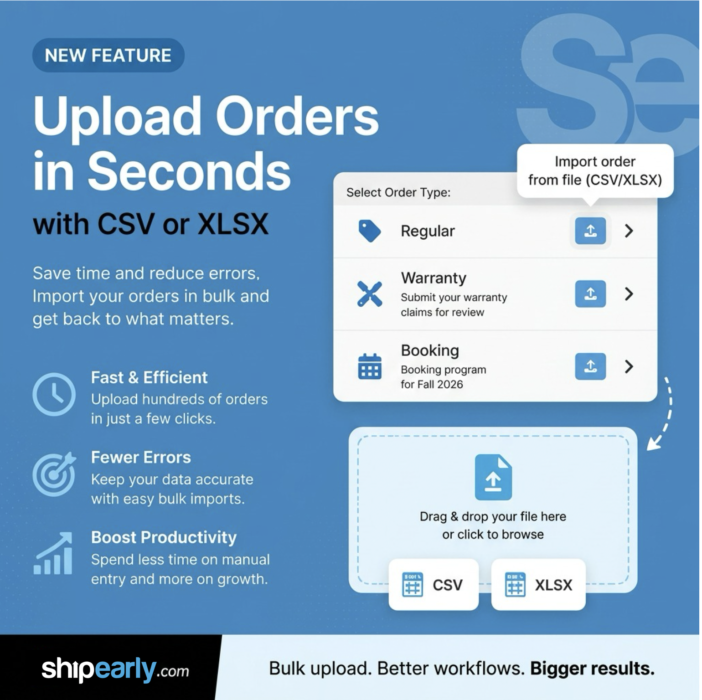
- A buyer or sales rep downloads or builds an order template (CSV or Excel).
- They fill in product SKUs, quantities, pricing rules, shipping details, or custom fields.
- The file is uploaded into the ordering system.
- The system validates the data before the order is created.
This validation step is where most of the value comes from.
Built-in Validation: Where Errors Get Caught Early
Unlike manual order entry, spreadsheet-based ordering can be validated before anything is committed. A proper system will typically check:
- SKU accuracy (does the product exist?)
- Quantity constraints (minimums, maximums, case packs)
- Pricing rules (contract pricing, tier pricing, customer-specific pricing)
- Inventory availability in real time
- Duplicate line items or malformed data
- Shipping and fulfillment rules
This prevents the most common B2B issues—ordering products that are out of stock, using incorrect SKUs, or violating pricing agreements.
Inventory Awareness in Real Time
One of the most powerful aspects of modern order upload systems is inventory checking during upload.
Instead of discovering stock issues after the fact, the system can:
- Flag unavailable items immediately
- Suggest substitutions or backorder options
- Split orders by warehouse availability
- Prevent overselling entirely
This is especially important in multi-warehouse or distributed fulfillment environments where stock levels change constantly.
Who Builds the Orders: Accounts or Sales Reps
A key advantage of CSV/XLSX ordering is flexibility in who creates the order:
Customer-side accounts
- Retailers, dealers, or distributors can build their own orders
- Reduces dependency on sales reps
- Speeds up repeat ordering cycles
Sales reps or account managers
- Reps can pre-build orders for approval
- Useful for guided selling or curated bundles
- Helps enforce pricing agreements and product strategy
This dual model supports both self-serve B2B commerce and traditional relationship-based sales.
Integration with Modern Commerce Platforms
CSV/XLSX order uploads don’t operate in isolation—they typically sit on top of broader commerce infrastructure.
Shopify
In platforms like Shopify, order upload tools can be extended via apps or custom integrations, allowing B2B workflows alongside direct-to-consumer storefronts.
WooCommerce
With WooCommerce, CSV/XLSX ordering can be implemented through plugins or custom endpoints, making it flexible for WordPress-based commerce stacks.
ERP systems
For enterprise environments, orders often flow into ERP systems such as SAP ERP or similar platforms, ensuring inventory, accounting, and fulfillment remain synchronized.
Native ERP Integrations + API-First Architecture
Modern B2B systems increasingly go beyond file uploads by offering:
- Native ERP integrations (bi-directional sync of orders and inventory)
- REST or GraphQL APIs for order creation
- Webhooks for status updates (approval, fulfillment, shipment)
- Automated validation rules shared across systems
This means CSV/XLSX uploads are often just one interface into a broader automated order ecosystem.
Why CSV/XLSX Still Matters (Even in an API World)
Even with APIs and automation, spreadsheet uploads remain important because:
- Most B2B buyers are already Excel-native
- Reps often work in spreadsheets internally
- Procurement teams require offline workflows
- It reduces training friction
- It allows batch ordering without system logins
In many cases, CSV/XLSX is the most accessible “universal interface” for commerce.
The Business Impact
Companies adopting structured order upload systems typically see:
- Fewer order entry errors
- Faster order processing cycles
- Reduced back-and-forth between buyers and sales teams
- Better inventory accuracy and forecasting
- Higher customer satisfaction in repeat ordering